Following Ficelle: How a Family Dog Enters the Genealogical Record
A family postcard signed by a dog named Ficelle reveals an unexpected source for genealogical research. Historical dog tax and licence records in France, Ireland, and the United States can provide information about ancestors, their addresses, and their everyday lives. Discover how these overlooked documents can help reconstruct family histories and where researchers can find them.
Written by Arnaud Ruiz
In July 1933, Ficelle posed for at least two family photographs. He later appeared somewhere less expected: at the end of a postcard sent during the Second World War.
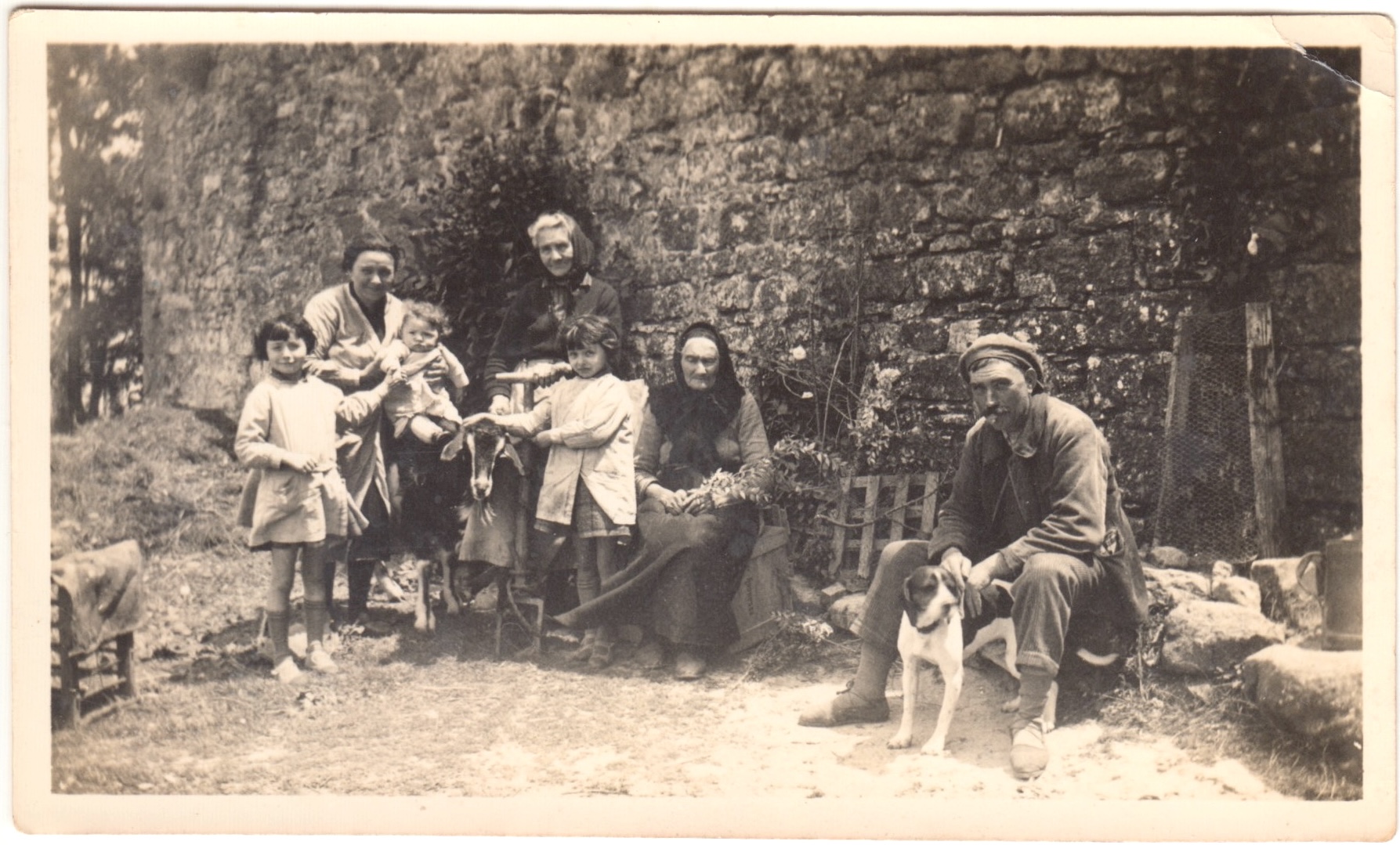
Ficelle belonged to my great-great-grandmother. Sometimes during the war, my grandmother, then a child, was spending part of her holiday with her. When she wrote to wish her mother a happy (name) day, she included Ficelle among the people sending their regards. His name joined the family signatures as though his place there required no explanation.
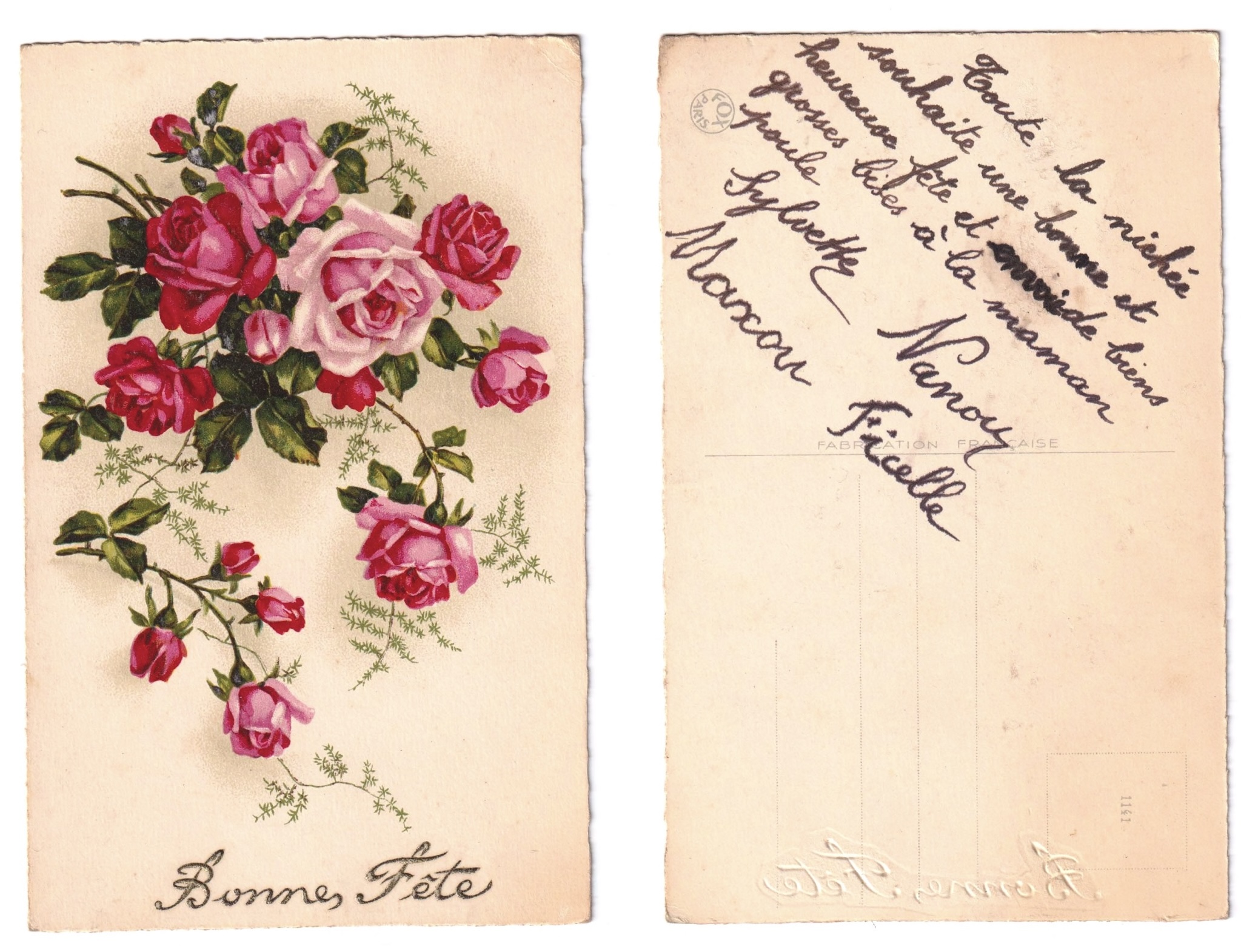
That small gesture captures something conventional genealogical records often miss. Ficelle belonged to the household’s daily life. He occupied the same rooms and paths, accompanied the same visits, and lived within the network of affection preserved in the postcard. A pedigree chart has no standard place for him.
Could a study of this family feel complete without its dog?
The postcard and photographs already tell us that Ficelle existed and was loved. They may also provide the clues needed to find him in public records. For generations, governments taxed, licensed, described, counted, and sometimes policed dogs. The resulting documents can lead back to their human owners and illuminate the households around them.
Begin with the evidence at home
Animal research usually starts with records created for people. Look through photographs, postcards, letters, diaries, household account books, and the backs of snapshots. A dog’s name may appear in a greeting, an anecdote, a note about food, or a caption written years later.
Record every concrete detail:
● the dog’s name and any spelling variations;
● the earliest and latest dated appearances;
● the people photographed or mentioned with the dog;
● the household’s address or city during that period;
● any indication of breed, color, sex, or purpose;
● visible tags, medals, or numbers on the collar.
Those details establish a search window and a jurisdiction. The jurisdiction matters because records of dogs were usually created locally. A national archive may preserve the law that introduced a tax, while the name of an individual owner survives in a municipal ledger.
In Ficelle’s case, July 1933 gives us a firm point in time. The postcard connects him to a particular family circle. The next question is administrative: did the commune record him, or at least the woman who kept him?
France taxed dogs for 115 years
France introduced the taxe sur les chiens under Napoleon III through the law of May 2, 1855. It took effect on January 1, 1856, and remained in place until its repeal by the law of June 7, 1971. Ficelle’s lifetime falls squarely within that period. The Departmental Archives of Haute-Garonne and the Departmental archives of Cantal both explain the tax and illustrate surviving records.

The legislation divided dogs into two fiscal categories. The more expensive category covered hunting dogs and chiens d’agrément, animals kept for companionship or pleasure. A lower rate applied to dogs considered useful, including certain guard, shepherd, and guide dogs. Municipal councils set the local amount within limits established by law.
That classification gives a tax entry interpretive value. A listed category may suggest how the administration viewed the animal’s role in the household. It cannot tell us exactly how the family felt about the dog. A watchdog could also be a cherished companion, and an official category may reflect a financial argument made by the owner. The entry records an administrative judgment, which researchers should keep separate from family memory.
The paperwork varied. A surviving annual rôle is a tax roll listing liable owners and the amount due. A registre à souches is a stub register used when declarations or receipts were issued. Depending on the place and period, a record may contain the owner’s name and residence, the number of dogs, the fiscal category, and the tax paid. Some declarations add an occupation or a description of the animal. Records relating to metal collar tags, enforcement, disputes, and unpaid assessments may survive as well.
The dog itself may remain unnamed. Even then, an entry can confirm that an ancestor kept a dog in a particular year and help distinguish two people with the same name. A sequence of yearly rolls may show when the animal first appeared or disappeared, though a gap could also result from noncompliance or a missing volume.
The French records may be filed where you least expect them
Searching for a French dog tax begins with the commune, not with a person’s surname in a nationwide database. Most surviving rolls have not been digitized or indexed by owner.
Useful catalog terms include taxe sur les chiens, rôles, déclarations, contributions directes, impôts locaux, registre à souches, médailles, and cotes irrécouvrables, meaning assessments that could not be collected. Search both the departmental archives’ catalog and any separate catalog for municipal archives.
The records are dispersed among several archival series:
| Where to look | What may be there |
|---|---|
| E-DEPOT or EDT | Municipal records deposited with the departmental archives, often the best place for village-level rolls and declarations |
| Series G or 1 G | Direct taxes, declarations, rolls, and municipal finance |
| Series O or 2 O | Municipal administration, roads, and local accounts; dog taxes were sometimes grouped with other local levies |
| Series P or 3 P | Direct-tax and cadastral administration, including matrices and assessment records |
| Series W | Records after 1940, including the final decades before repeal |
Catalog practice differs by repository; treat these series as starting points. The national portal ++FranceArchives++ includes descriptions of dog-tax rolls, and individual departmental catalogs can reveal the exact call number and years held.
For Ficelle, the ideal discovery would be a 1933 declaration naming or describing him. A roll that lists only his owner would still add a public record to the private evidence of the photographs and postcard. Before planning a visit, ask the archive whether rolls survive for the commune and year, whether they remain with the town hall, and whether staff can confirm the contents of the relevant file.
In Ireland, the dog may help locate the family
Irish dog licence registers show how useful animal records can become when better-known sources are incomplete. Licences were issued through local Petty Sessions courts from 1866. Entries can include the owner’s name and residence, the date, and details such as the dog’s sex, color, and breed or type. Some clerks also recorded the dog’s name.
These registers are especially valuable because so many nineteenth-century Irish census returns were lost. Annual licence entries can place a person in a townland between surviving censuses or trace a change of residence from one licensing district to another. They may also help separate neighbors who shared a name.
Millions of Irish registrations have been indexed. Researchers can search the ++Ireland Dog Licence Registers at Findmypast++ and the ++Ireland Dog License Registrations collection at FamilySearch++. As with any index, consult the image when available. Handwriting, ditto marks, abbreviated place-names, and column headings can change the meaning of a transcription.
A run of licences can reveal continuity that a single record cannot. The same owner, townland, and dog description across several years may indicate one animal being relicensed. A change of color or breed should prompt caution: it could represent a new dog, a clerk’s loose terminology, or an indexing error.
New York’s old towns licensed their dogs too
American dog records are decentralized. Depending on the state and period, a tax or licence might have been managed by a county, town clerk, city clerk, board of health, or animal-control office. The purpose also varied. Some dog taxes helped compensate farmers for livestock killed by roaming dogs; urban licences became closely associated with identification and rabies control.
New York City offers a useful example. The Municipal Archives preserves dog licences among its “Old Town Records,” created before the five boroughs were consolidated into the modern city. The ++NYC Department of Records and Information Services++ highlights these licences in the records of former towns. For a family living in one of those jurisdictions, a dog licence can provide an owner’s name, a place, and evidence of interaction with local government.
New York still licenses dogs, and the city’s contemporary ++dog licensing dataset++ shows the modern continuation of this record type. Privacy rules and retention schedules will affect access to recent records, while historical licences may be open through an archive.
Elsewhere in the United States, search archive catalogs for combinations of the place name with “dog tax,” “dog licence,” “dog license,” “animal control,” “town clerk,” and “board of health.” County tax books can be particularly useful. The Pennsylvania State Archives, for example, describes county records in which poor and dog taxes were recorded together. Maryland holdings cited in the supplied research even include entries giving owners and individual animal names.
A licence can describe a society as well as a dog
The value of these records reaches beyond locating one beloved animal. A government that distinguishes working dogs from companions has recorded its assumptions about labor and luxury. A town that issues metal tags has left evidence of local administration and public-health enforcement. Lists of unpaid dog taxes may identify households experiencing poverty, death, departure, or simple resistance to the tax collector.
Comparisons across time can also show changing relationships with animals. France eventually abandoned its dog tax in 1971 after collection had become inefficient. Germany’s municipal Hundesteuer continues, so historical files are generally sought in a Stadtarchiv, or city archive. The City Archives Greven ++catalog++, for example, identifies a file devoted to the dog tax. In the United States, licensing developed locally and often became tied to public health. Each system produced a different paper trail because each government was trying to solve a different problem.
That context should guide interpretation. Absence from a roll never proves that a household had no dog. The record may be missing, the owner may have avoided registration, the animal may have been exempt, or the clerk may have entered another household member. Dog records work best when combined with addresses, censuses, directories, land records, photographs, and correspondence.
Let the dog lead you back to the household
Ficelle first reached us through a child’s postcard and photographs taken in the interwar years. Those private records establish his place in the family far better than a tax collector could. An archival entry would contribute something different: a date, a classification, perhaps a physical description, and another trace of the household that cared for him.
The practical lesson is wonderfully simple. When an animal appears in a photograph or signs a postcard, write down its name. Establish the place and years. Then search the records created by the authority that wanted the dog counted, taxed, licensed, tagged, or controlled.
If the relevant register is only available in a distant reading room, GenealogyDirect can help you ask a local researcher to consult it. Genealogists who know their local municipal and fiscal collections can also offer precisely the expertise these overlooked records require.
Ficelle’s place among the signatures already tells us he belonged. The archives may yet tell us how the commune knew him.
Sources and further research
● ++Archives départementales de la Haute-Garonne, “La taxe sur les chiens”++
● ++Archives départementales du Cantal, “Une taxe qui a du mordant !”++
● ++FranceArchives, “Taxe sur les chiens : rôles”++
● ++FamilySearch, Ireland Dog License Registrations, 1810–1926++
● ++Findmypast, Ireland Dog Licence Registers++
● ++NYC Department of Records and Information Services, “Dog Licenses in the Old Town Records”++
● ++Data.gov, NYC Dog Licensing Dataset++
● ++Pennsylvania State Archives, Record Group 47: County Governments++
● ++Archive in North Rhine-Westphalia, Stadtarchiv Greven dog-tax file++